The third day of Gettysburg brought the battle to its decisive climax. Fighting resumed at Culp’s Hill, and later in the day Confederate troops advanced across open ground toward the Union center on Cemetery Ridge in the assault remembered as Pickett’s Charge.
The attack failed. By the end of July 3, Lee’s army had not broken the Union line. The Confederate retreat began after the battle, ending the invasion of Pennsylvania.
Morning Fighting at Culp’s Hill
The final day did not begin with Pickett’s Charge. Fighting continued at Culp’s Hill, where Union and Confederate troops struggled for control of important ground on the Union right.
Culp’s Hill deserves close attention because it was essential to the Union defensive line. Holding this ground helped protect the Union position and communications.
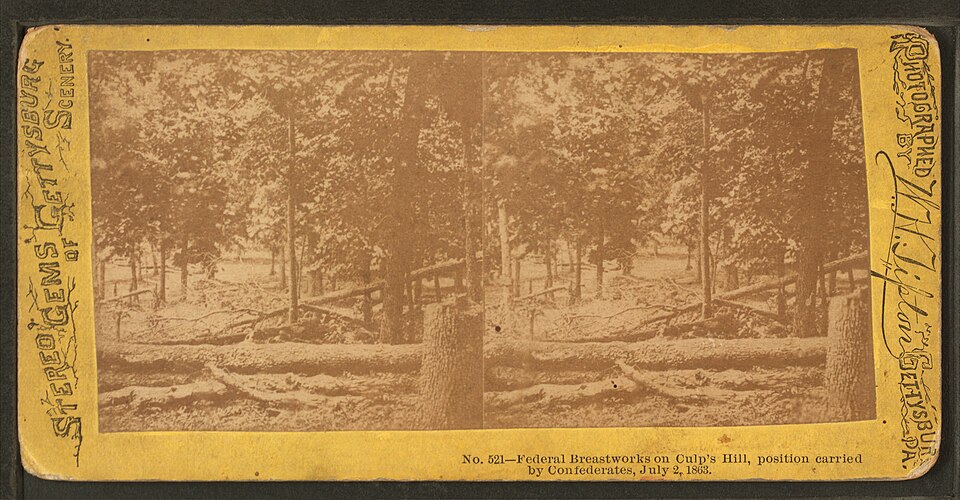
Source: William H. Tipton
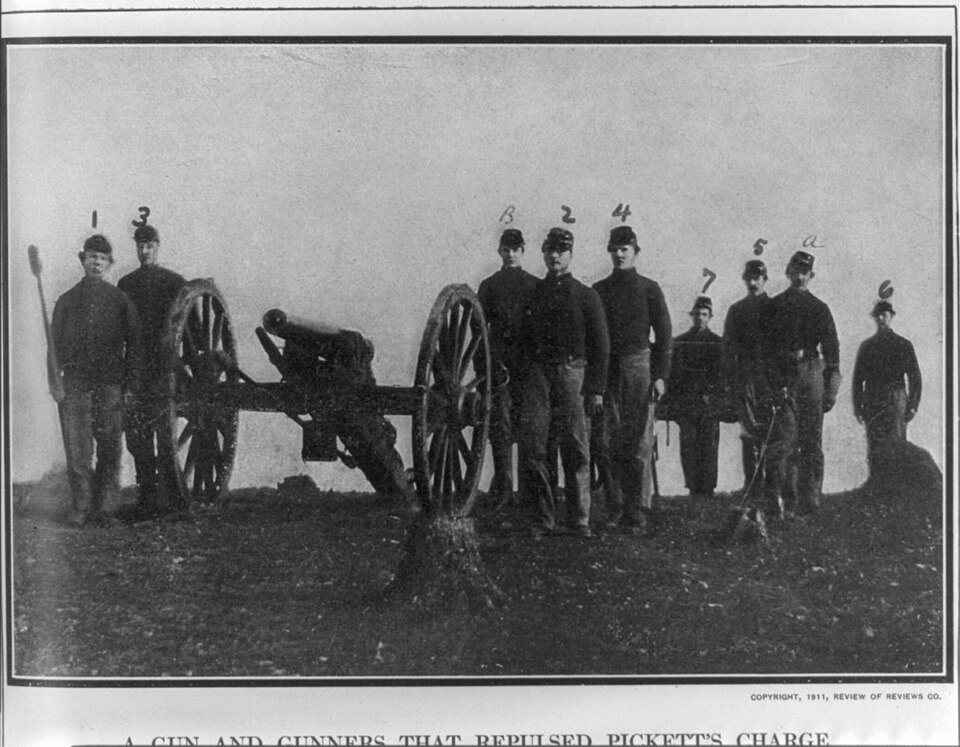
Source: Library of Congress
The Cannonade
Before the main Confederate infantry assault, artillery fire shook the battlefield. The cannonade was intended to weaken the Union center and prepare the way for the attack.
Artillery played a major role in the psychological and physical experience of the battle. Smoke, noise, confusion, and limited visibility affected soldiers and commanders alike.
Pickett’s Charge
Pickett’s Charge is the common name for the Confederate assault against the Union center on Cemetery Ridge. Troops advanced over open ground under Union artillery and infantry fire. The assault reached the Union line in places but was repulsed.
The attack became one of the most famous moments of the Civil War. It is often remembered as the symbolic high-water mark of the Confederacy, though historians continue to analyze the phrase, its meaning, and its limits.
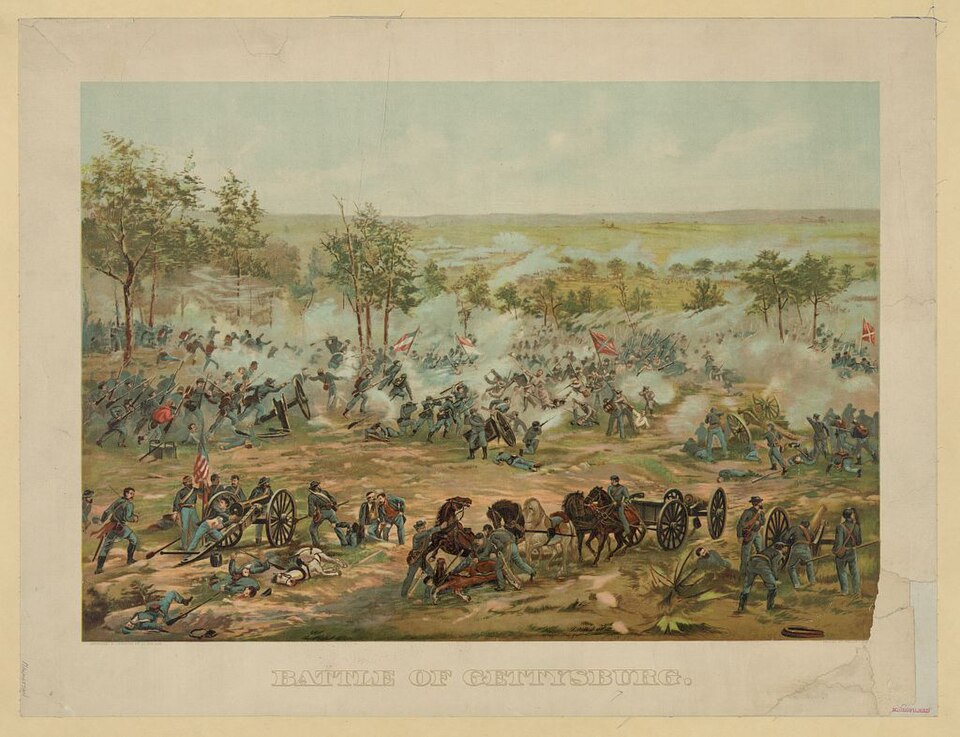
Source: Philippoteaux / print 1896
The Aftermath
The failure of the July 3 assault ended Lee’s hopes for victory at Gettysburg. After the battle, the Confederate army retreated toward Virginia. The Union army remained on the field but did not destroy Lee’s army.
The human cost was immense. Gettysburg became a place of burial, recovery, grief, and remembrance.
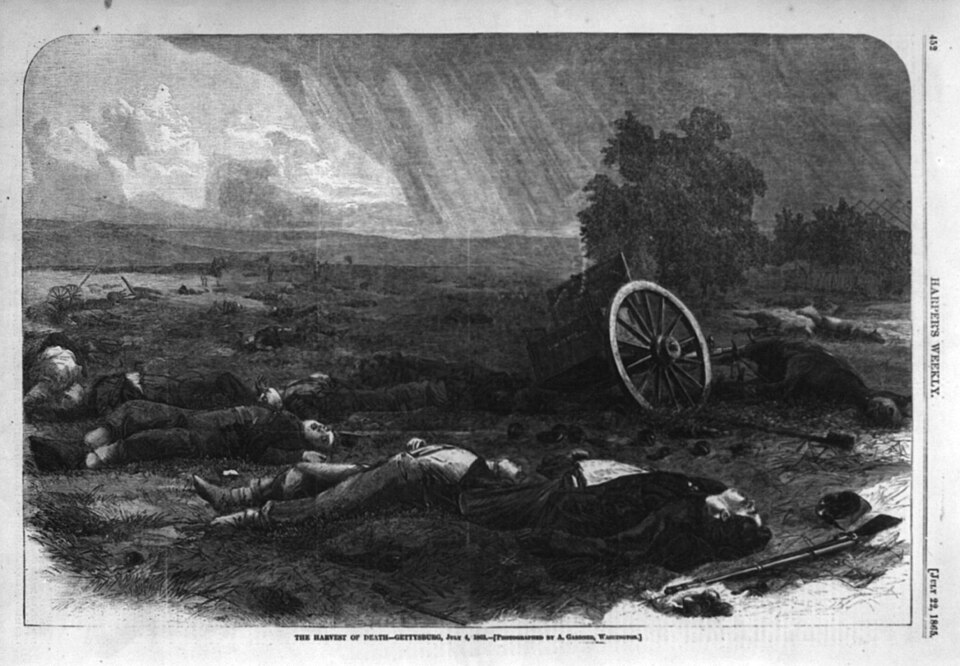
Source: Alexander Gardner / Library of Congress