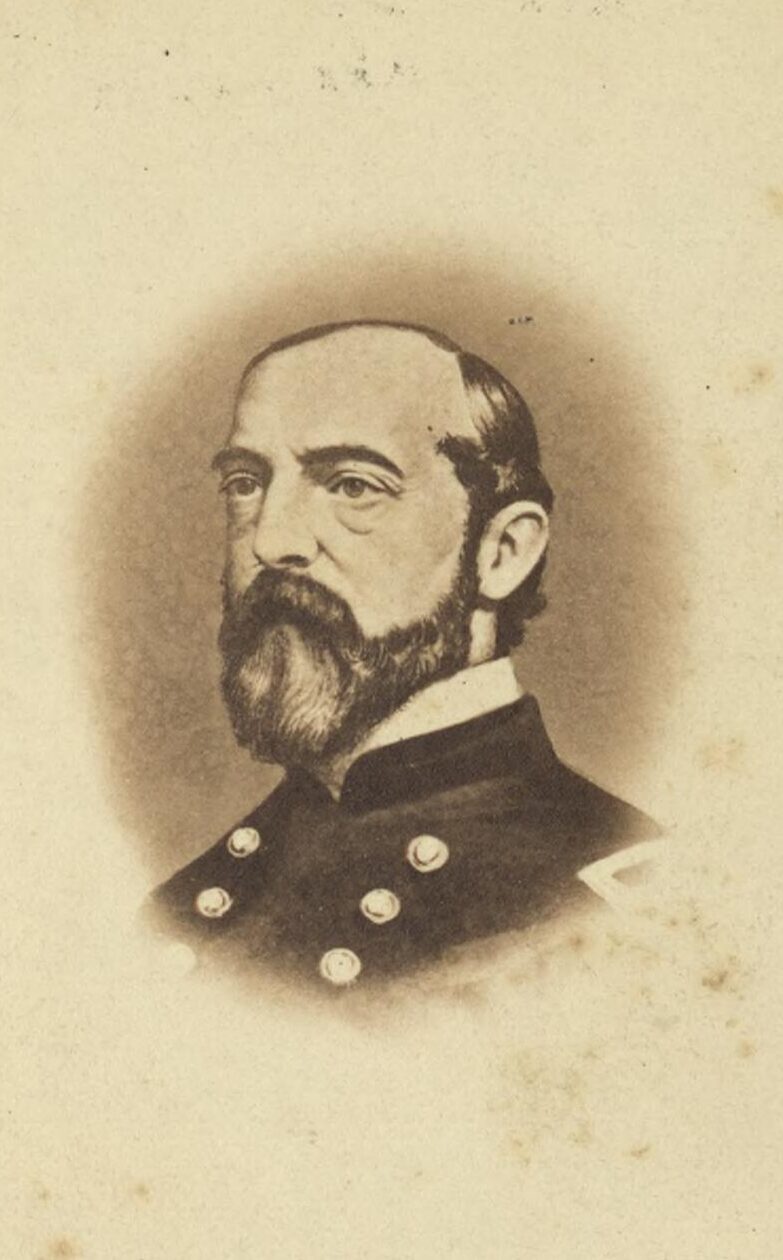
Image source: Unknown photographer
Overview: George Meade commanded the Army of the Potomac at Gettysburg, having been placed in charge just three days before the battle began. His steady, methodical leadership during the fighting helped the Union army hold its ground through three days of intense combat.
Before Gettysburg: A career U.S. Army engineer and Pennsylvania native, Meade had risen through division and corps command during the war, earning a reputation as a competent, cautious officer rather than a flamboyant one.
Role at Gettysburg: Meade took command of the army on June 28, 1863, and quickly moved it north to confront Lee’s invasion. He chose to concentrate his forces on the high ground around Gettysburg, approved the defensive line that held through July 2, and directed the artillery and infantry response that broke Pickett’s Charge on July 3.
After Gettysburg: Meade continued to command the Army of the Potomac for the rest of the war, though he was later overshadowed by Ulysses S. Grant, who took overall command of Union armies in 1864 and worked alongside Meade’s army through the war’s final campaigns.
Why This Story Matters: Meade’s decision to fight defensively on favorable ground, and his ability to hold a fragile line together under pressure, is central to why the Union won at Gettysburg.