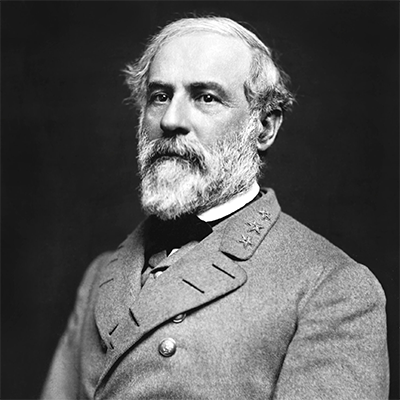
Image source: Brady-Handy
Overview: Robert E. Lee commanded the Confederate Army of Northern Virginia during its second invasion of the North, an offensive that ended in defeat at Gettysburg.
Before Gettysburg: A former U.S. Army officer and West Point graduate, Lee had led the Army of Northern Virginia to a string of victories in 1862 and early 1863, including at Chancellorsville just two months before Gettysburg.
Role at Gettysburg: Lee sought a decisive battle on Northern soil that might weaken Union resolve and ease pressure on Virginia. Over three days he ordered attacks on both Union flanks and, on July 3, the massed infantry assault against the Union center known as Pickett’s Charge. The attack failed with heavy losses.
After Gettysburg: Lee withdrew his army back to Virginia and continued to lead it for nearly two more years, fighting a largely defensive campaign against Grant before surrendering at Appomattox in April 1865.
Why This Story Matters: Lee’s defeat at Gettysburg ended the last major Confederate offensive into Union territory and is widely regarded as a turning point after which the Confederacy fought primarily to defend its own territory.