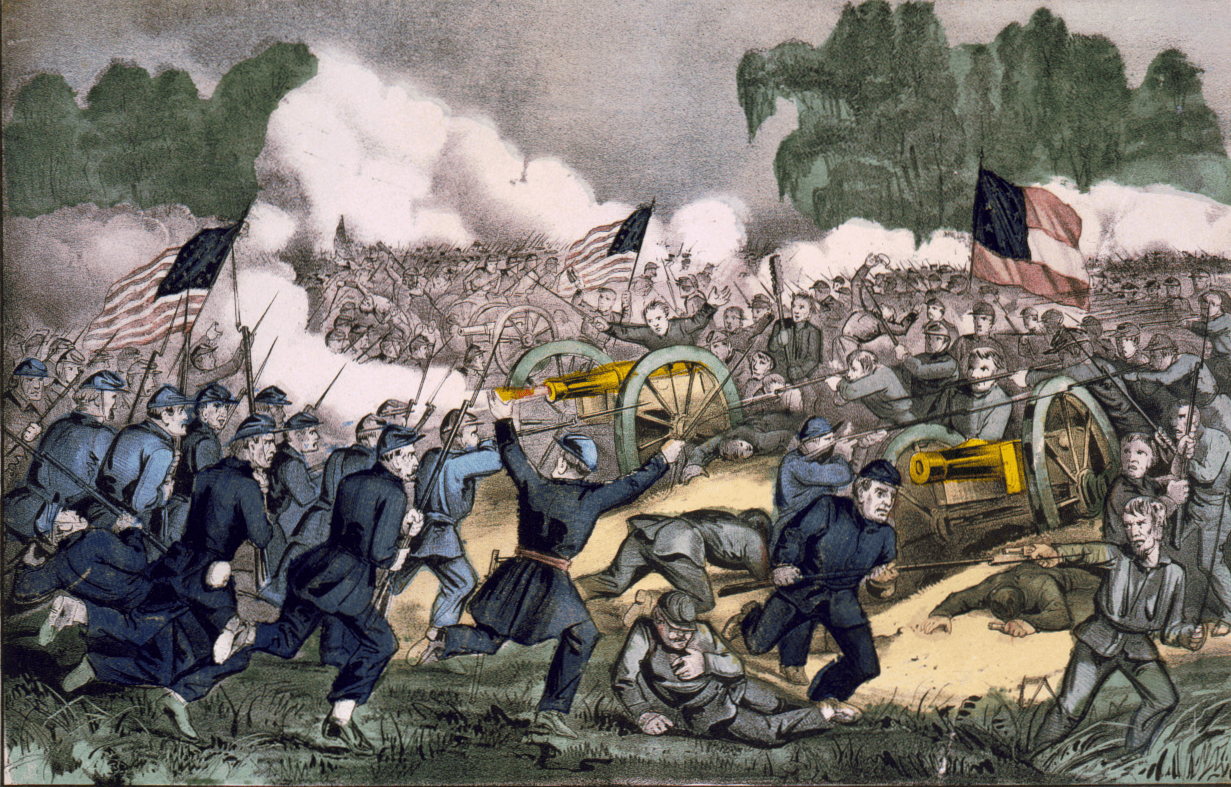
The Battle of Gettysburg was fought from July 1 to July 3, 1863, in and around Gettysburg, Pennsylvania. It brought the Union Army of the Potomac and the Confederate Army of Northern Virginia into one of the largest and most consequential battles of the Civil War.
The battle did not begin as a planned set-piece engagement. It developed from contact between advance forces and grew into a massive confrontation as both armies concentrated around the town. By the end of the third day, the Confederate army had failed to break the Union position and began its retreat back toward Virginia.
The Armies
The Union Army of the Potomac was commanded by Major General George G. Meade, who had only recently taken command before the battle. The Confederate Army of Northern Virginia was commanded by General Robert E. Lee, who had led his army north into Pennsylvania after earlier Confederate success in Virginia.
Both armies were experienced, battered, and dangerous. Their commanders faced immense pressure. Lee sought a victory on Northern soil that might change the political and military direction of the war. Meade had to protect the route to Washington and stop Lee’s advance.
Source: Currier and Ives
Source: John B. Bachelder
Why the Battle Happened at Gettysburg
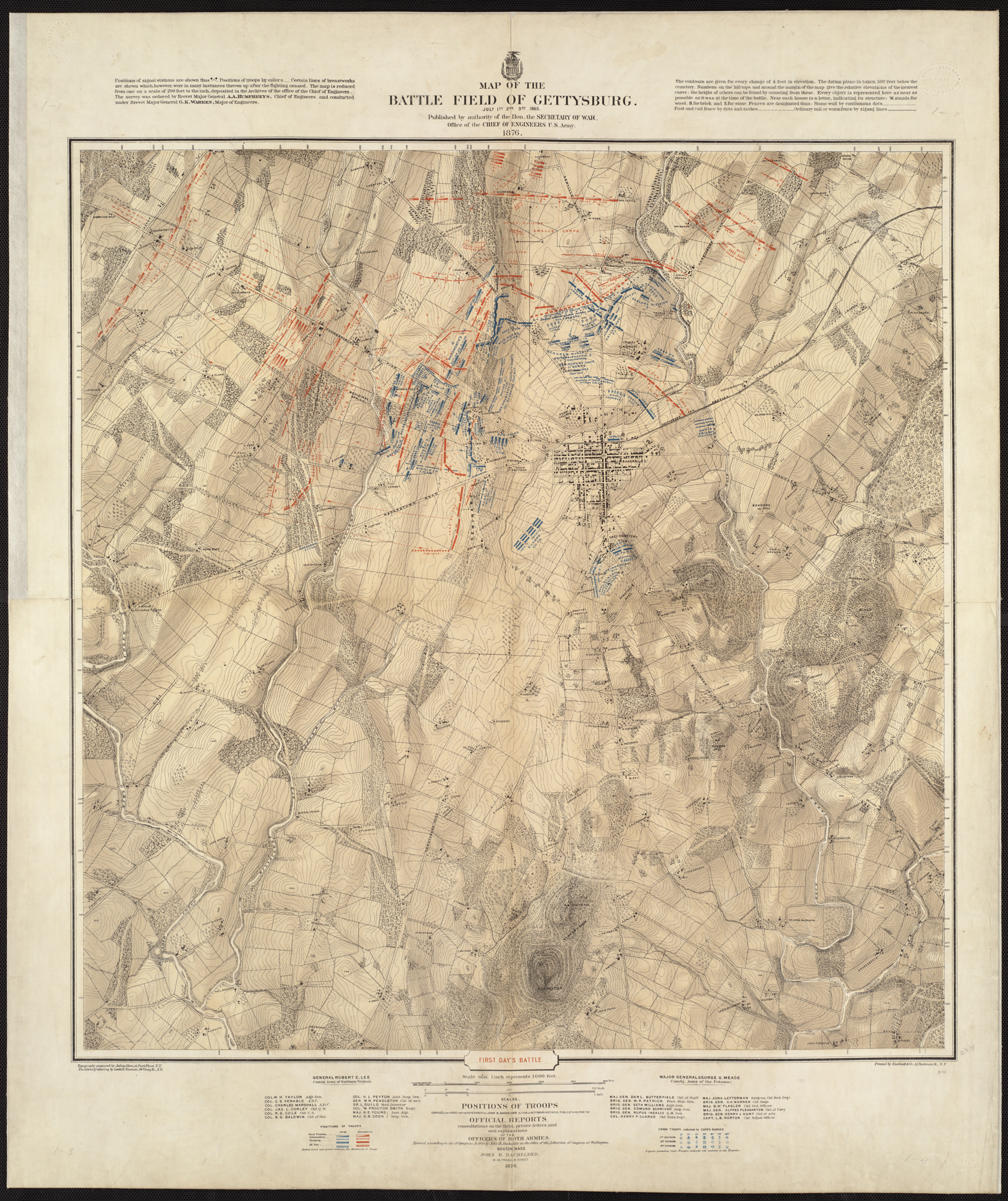
Gettysburg was a road hub. Roads from multiple directions converged on the town, making it a natural place for military movement and concentration. As elements of both armies moved through the region, contact west and north of town escalated into a full battle.
The battle’s location was shaped by movement, pursuit, reconnaissance, terrain, and the speed with which units arrived. Once the fighting began, both sides fed more troops into the area.
The Three Days
July 1, 1863:
Fighting began west and north of Gettysburg. Union cavalry and infantry delayed Confederate advances, but Union forces were eventually pushed back through the town. By the end of the day, Union troops held strong defensive ground south of Gettysburg, including Cemetery Hill and Cemetery Ridge.
July 2, 1863:
The second day saw intense fighting across the Union left, center, and right. Major actions occurred around Little Round Top, Devil’s Den, the Wheatfield, the Peach Orchard, Cemetery Ridge, Culp’s Hill, and Cemetery Hill. The Union line was strained but held.
July 3, 1863:
The final day included renewed fighting at Culp’s Hill and the Confederate assault remembered as Pickett’s Charge. Confederate troops advanced across open ground toward the Union center on Cemetery Ridge but were repulsed. The failure of the assault marked the end of Lee’s offensive effort at Gettysburg.
Why Gettysburg Was Significant
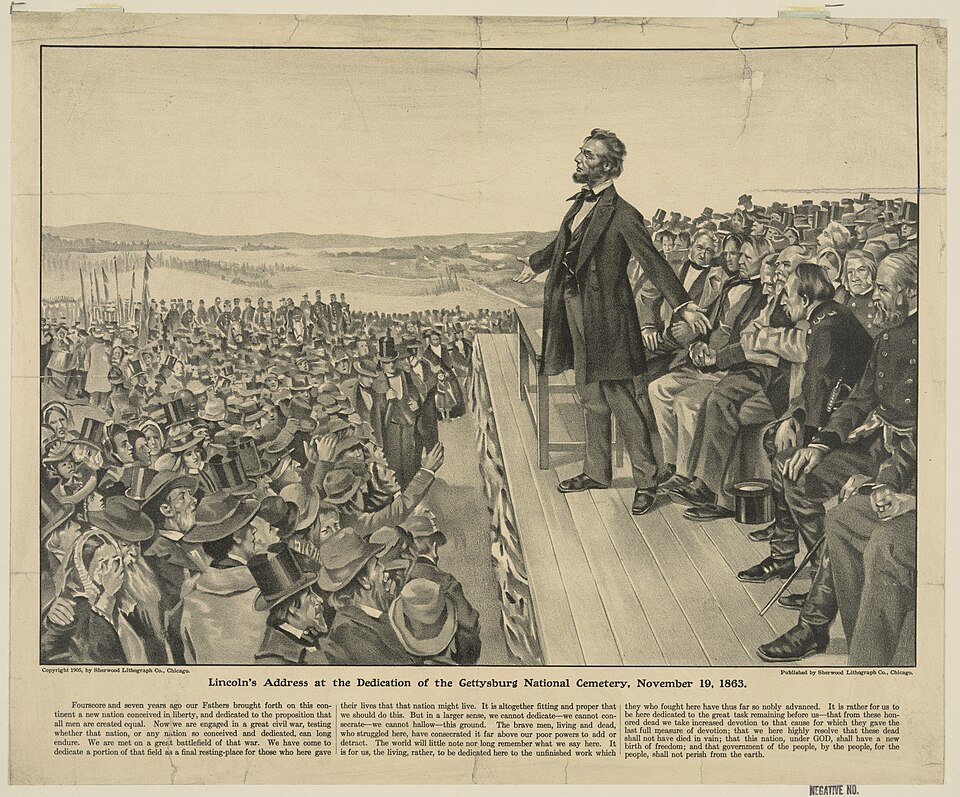
Gettysburg was significant because it stopped Lee’s invasion of the North and gave the Union a major victory at a critical point in the war. The battle also became central to national memory because of the scale of loss and Lincoln’s later Gettysburg Address.
Gettysburg did not end the Civil War. The war continued for nearly two more years. But Gettysburg became one of the defining symbols of the conflict and of the question Lincoln framed at the cemetery dedication: whether a nation founded on liberty and equality could endure.
Source: Library of Congress