The second day of Gettysburg brought some of the battle’s most intense and remembered fighting. Confederate attacks struck the Union left, center, and right, producing brutal combat across some of the battlefield’s most famous locations.
The Union line was stretched and repeatedly threatened, but it held. By nightfall, neither side had achieved a decisive breakthrough.
The Union Position
Union forces occupied a defensive line often described as a fishhook shape. The line ran from Culp’s Hill and Cemetery Hill on the right, along Cemetery Ridge in the center, and toward the Round Tops on the left.
The strength of the Union position came from terrain, interior lines, and the ability to reinforce threatened areas. But the line was not immune to danger. Gaps, exposed positions, and timing all mattered.
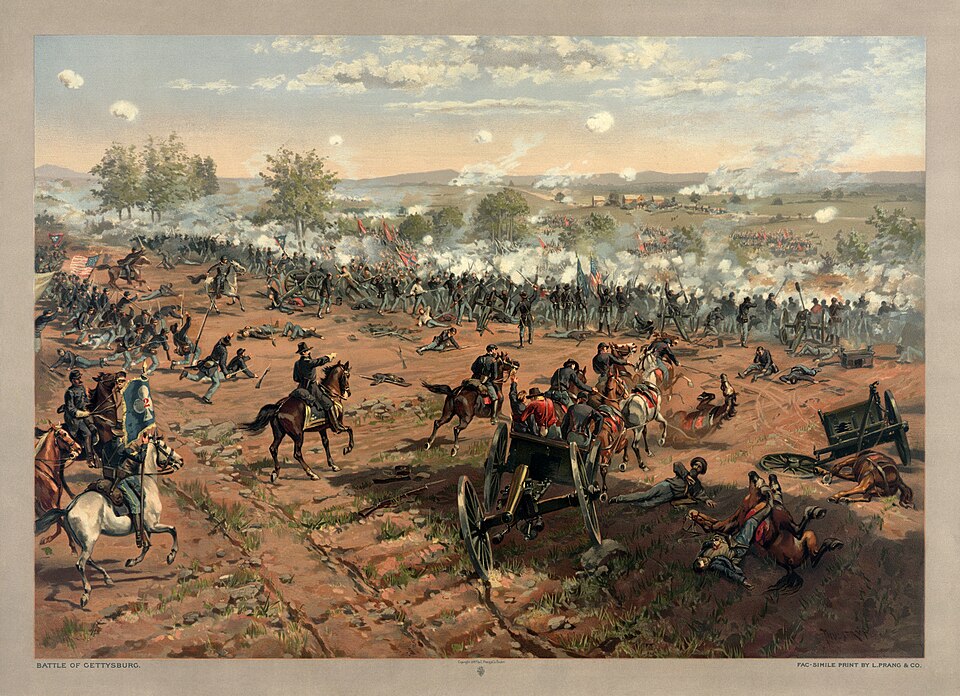
Source: Thure de Thulstrup, L. Prang and Co.
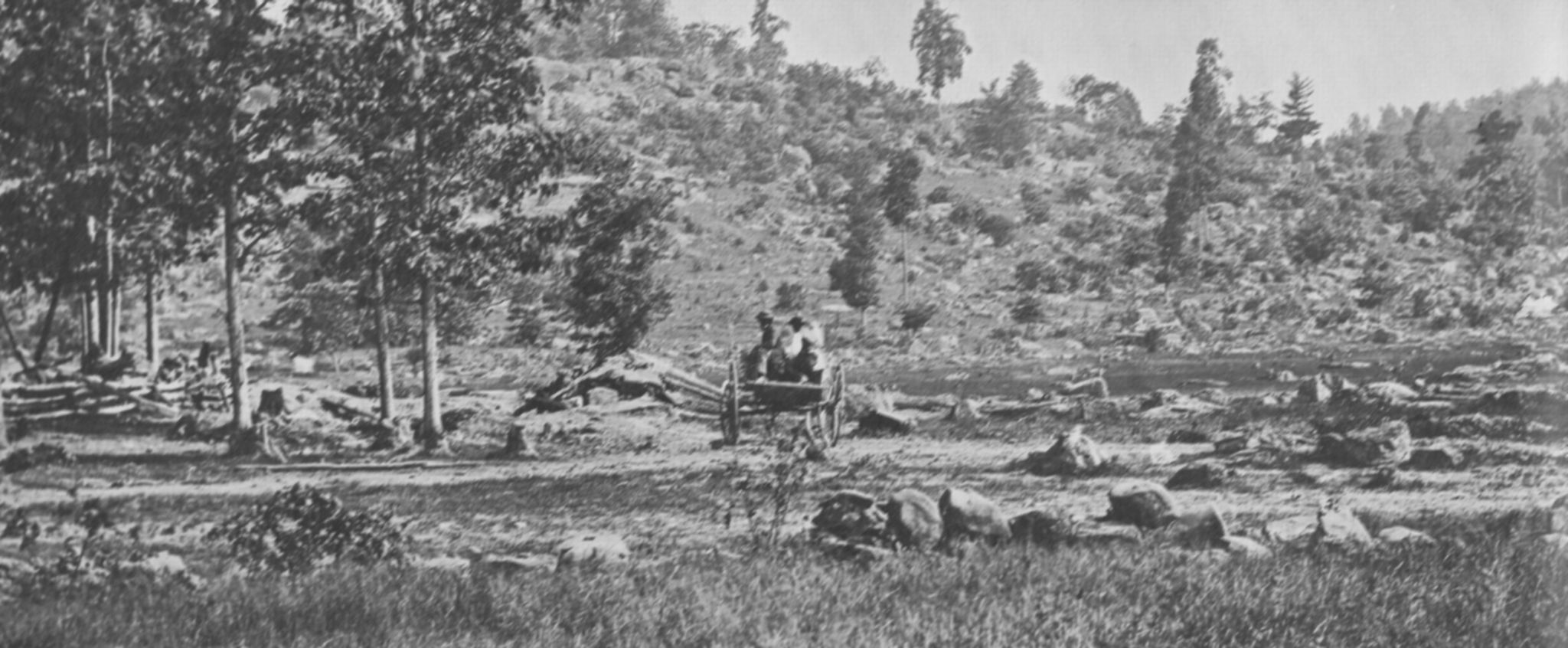
Source: Timothy H. O’Sullivan
Little Round Top and Devil’s Den
Little Round Top became one of the most famous locations on the battlefield because Union troops defended the hill against Confederate attacks that threatened the Union left. Nearby Devil’s Den, with its rocky terrain, saw violent fighting and became one of Gettysburg’s most recognizable landscapes.
These locations show how terrain shaped combat. Hills, boulders, fields, and lines of sight all influenced what soldiers could see, where they could move, and how commanders responded.
The Wheatfield and Peach Orchard
The Wheatfield and Peach Orchard became scenes of repeated attacks, counterattacks, and heavy casualties. Control shifted as units from both armies were committed into the fighting.
These areas can be difficult to understand without context because the action moved back and forth. They are best studied as part of the broader struggle for the Union left and center-left.
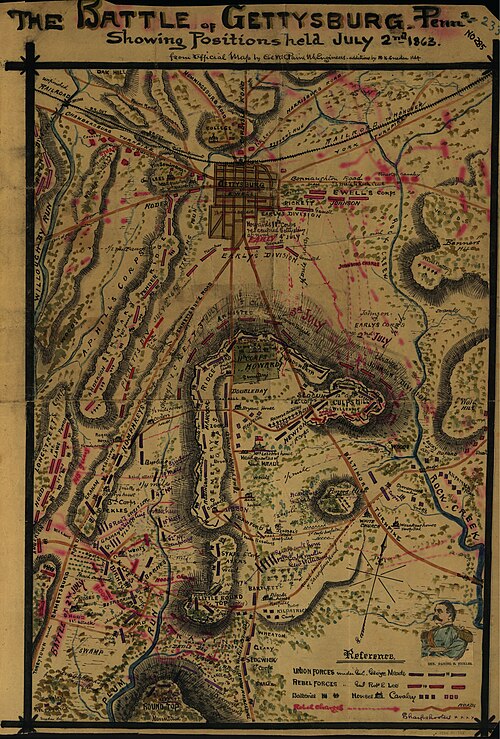
Source: Library of Congress
Culp’s Hill and Cemetery Hill
While much attention often goes to Little Round Top, the fighting at Culp’s Hill and Cemetery Hill was also critical. These positions helped anchor the Union right. Confederate attacks threatened these areas, and the fighting continued into the next day.
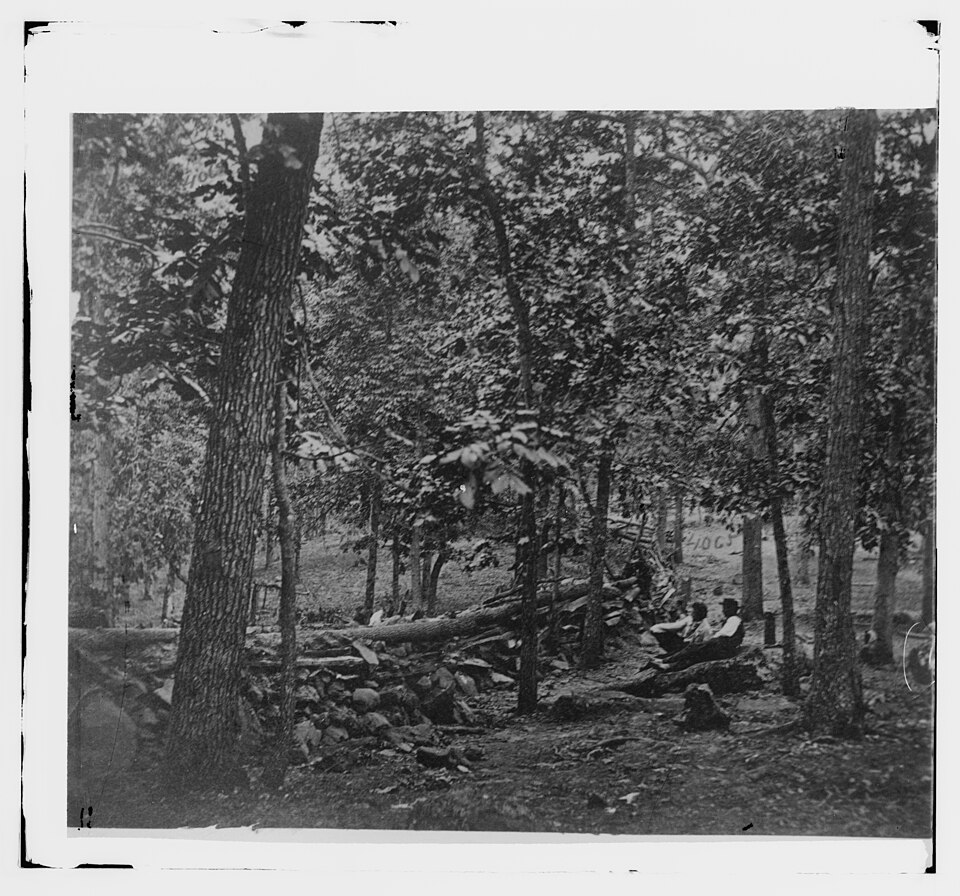
Source: Library of Congress
Why Day Two Matters
Day Two mattered because the Confederate army came close to creating major breaks in the Union line, but the Union position survived. The day’s fighting exhausted units, reshaped the battlefield, and set up the final Confederate assault on July 3.